What Is a Medical Assisting Practicum?
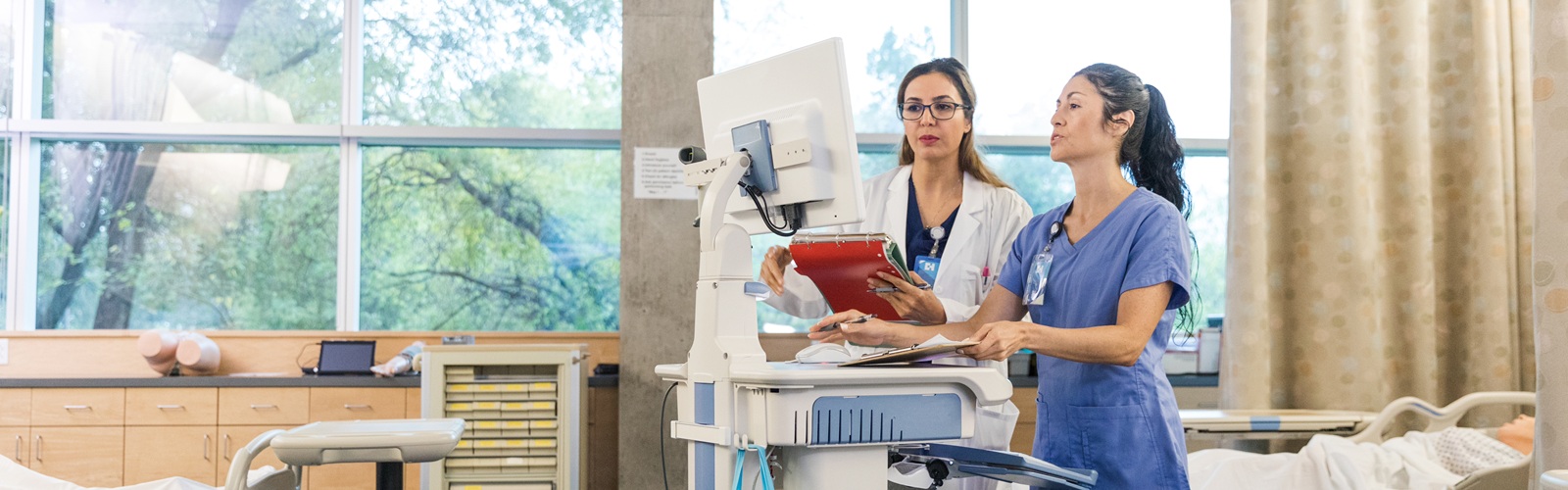
 A medical assisting practicum is a supervised, real-world training experience that takes place in an actual healthcare environment. Think of it as a bridge between the classroom and your first job. During your practicum, you’ll step into the role of a medical assistant and perform many of the same tasks you’ve been learning about in your coursework. As you do, you’ll be under the guidance of experienced healthcare professionals, ready to help you if or whenever you need it.
What Does a Medical Assisting Practicum Involve?
At South University, our medical assistant program involves a 160-hour practicum. Your practicum experience may vary depending on your placement. Students may expect a mix of both clinical and administrative responsibilities.
Clinical tasks may include:
- Taking patient vital signs (blood pressure, temperature, pulse)
- Preparing patients for exams
- Assisting physicians during procedures
- Collecting and preparing lab specimens
- Practicing infection control and safety procedures
Administrative tasks may include:
- Scheduling appointments
- Updating patient records
- Handling billing and insurance forms
- Communicating with patients and healthcare staff
This combination helps you develop a well-rounded skill set, something employers look for when hiring medical assistants.
Where Can You Do a Medical Assisting Practicum
Medical assisting practicums may take place in a variety of healthcare settings and patient care environments. Common practicum sites include:
- Physician offices
- Outpatient clinics
- Urgent care centers
- Specialty practices (such as pediatrics, cardiology, or dermatology)
- Medical laboratories
This experience may help you discover what type of workplace best fits your interests and career goals.
When Do You Complete a Practicum?
At South University, the practicum takes place in the last quarter of your medical assistant program. By this point, you’ve already completed foundational medical assisting classes and coursework in areas like:
- Medical terminology
- Anatomy and physiology
- Healthcare documentation, law, and ethics
- Medical office and lab procedures
- Medical insurance and coding
This timing is designed to prepare you to apply what you’ve learned in a real healthcare environment with confidence.
How South University Helps Students Find Practicum Placements
Finding the right medical assisting practicum site can feel overwhelming, but you’re not on your own with South University. We support students throughout the process to provide a positive experience.
Placement assistance: The university works with a network of local healthcare providers to help identify practicum opportunities that align with your program requirements and career goals. Practicum sites are selected to provide meaningful, hands-on learning experiences that reinforce your education and help you build job-ready skills.
Guidance and preparation: Our faculty strive to prepare you for your practicum. Our medical assisting classes help you build your professionalism and communication skills and give you an idea of what to expect in a clinical setting.
Support along the way: Even after your placement begins, you can reach out to us with questions and requests. You’ll always have support from instructors and program staff to help ensure your experience is successful.
Why the Practicum Matters
A medical assisting practicum is a key step in your career journey. It allows you to:
- Gain real-world experience
- Build confidence in your skills
- Make professional connections
- Strengthen your resume
- Learn what duties you enjoy most
Take the Next Step Toward Your Healthcare Career
If you’re considering a career as a medical assistant, understanding the practicum experience is designed to help you feel more prepared and excited about what’s ahead. With the support of South University, a medical assisting practicum gives you the opportunity to gain hands-on experience in a real healthcare setting, helping you transition from student to healthcare professional. Learn more about our Associate of Science in Medical Assisting program and request information to talk with our team about what’s next!
--
Programs, including all Clinical/Medical programs, have a required in-person, practicum, or externship. We cannot guarantee flexibility in these components of the program.