Meet South University, Tampa Grad Christian Otero
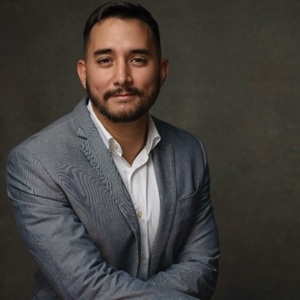 As Director of Operations at Pineapple Healthcare in Orlando, Florida, Christian Otero takes great pride and care in this work. He first joined the LGBTQIA+ primary care organization in 2024, driven by his own personal experience with bias and prejudice. “I wanted to give back and be part of the solution,” he says.
Thanks to his education, Christian has helped many patients, both at Pineapple Healthcare and in past physician assistant (PA) jobs. “South University gave me a strong clinical foundation,” he explains. “More importantly, it taught me how to think like a provider, how to reason through a differential, how to approach a patient with both empathy and clinical precision, and how to keep learning once the structured environment of school was gone.”
Faculty Committed to PA Student Success
For Christian, what drew him to South University, Tampa was how much the team cared about their students. “From the start, it was clear that this wasn't going to be a program where students were just a number. The faculty and staff were committed to seeing each of us succeed,” he recalls. “That level of support made a real difference in a program as demanding as PA school.”A PA Career Started in New York in a Pandemic
Christian graduated from the South University, Tampa PA program in 2020 and began his career in New York at the height of the COVID-19 pandemic. As a graduate, he was especially thankful to already have patient care experience from the hands-on clinical rotations in his PA program. “That preparation is what allowed me to walk directly into a NeuroICU role at NewYork-Presbyterian right out of school, during one of the most demanding periods in modern healthcare,” he says.As a newly licensed PA, Christian worked in an 18-bed neurology critical care unit. He was managing strokes, intracranial hemorrhages, and critically ill patients and had to make many precise, split-second decisions. “The critical thinking skills I built at South University gave me the confidence to trust my clinical reasoning, even in high-acuity, high-pressure situations,” he says.
A year later, Christian moved to AdventHealth Orlando. There, he was trained to independently run the NeuroICU overnight, leading rounds and managing all patients in the 40-bed unit without a second provider on-site. He also took on a teaching role, training the nursing staff to recognize critical neuroradiology findings and respond faster at the bedside. “This period pushed my clinical independence and leadership further than I imagined possible so early in my career,” he shares.
In 2023, Christian started doing remote neurology consults with Access Telecare. He covered up to five hospitals simultaneously while continuing per diem work at AdventHealth.
A Move into HIV Medicine and Leadership
Christian started at Pineapple Healthcare in 2024 part-time but soon switched to full-time. He became an American Academy of HIV Certified Specialist and earned a Certified Biomedical Research credential that same year. In 2025, he completed a Doctor of Medical Science in Advanced Clinical Practice at the University of Lynchburg.As Director of Clinical Operations, Christian now oversees all advanced practice providers, nurses, and medical assistants across every Pineapple Healthcare location. He leads ongoing education, including case discussions, journal club, and guideline updates, to keep the clinical team current on evolving HIV and primary care standards. “I live by the philosophy that the day we stop learning is the day we stop practicing medicine,” he shares. “Medicine never stands still, and neither should we.”
Christian works closely with his leadership team to ensure all clinics run smoothly and consistently deliver high-quality care. At the same time, Christian provides primary care for his own patients who are managing HIV, often alongside chronic conditions. “Ultimately, my role is about making sure that every patient who walks into any Pineapple Healthcare location receives care that's clinically excellent and free of the judgment or bias so many in our community have experienced,” he says.
Understanding the Why: One Secret to His Success
One habit Christian learned at South University was asking why. While working in neurology, he always tried to understand disease and pharmacology at the biochemical level. Why did certain medications interact the way they did? Why did specific injury patterns lead to what he saw at the bedside?“That depth of understanding is what allowed me to run the unit independently overnight,” says Christian. “I trained myself to think in sync with the thought process of my attendings, understanding the mechanism behind their decisions well enough that I could reason through complex cases the same way they would, even when they weren't there to ask.”
He uses the same way of thinking in HIV medicine and primary care. “I still approach all of it by going back to the underlying biochemistry and physiology rather than just following a guideline table,” he says. “It's made me a better clinician and a better educator, because I can explain the why behind a treatment decision to both patients and the APPs I mentor, not just the what.”
Advice for Future PAs
Christian advises future PAs to also be curious about the why. “The students who thrive long-term are the ones who build a genuine understanding of the mechanisms behind what they're learning, not just memorize facts for the next exam,” he says.The value of mentorship, both finding a mentor and being one, is not to be underestimated either. “Some of the most important growth in my career happened because someone more experienced took the time to explain the why behind a decision,” he says. “I've tried to pay that forward with every nurse, PA, and provider I've trained since.”
His final piece of wisdom? To trust the process. “PA school is intense,” he admits. “There will be moments that feel overwhelming, but the discipline and clinical foundation you build here will carry you further than you expect, sometimes into rooms and roles you never imagined.”
Want to learn about our PA school?
See more about our Master of Science in Physician Assistant program or request information to speak with our Admissions team.Graduates, tell us your alumni success story!
If you’re a grad who wants to share your experiences and career highlights, visit the South University Alumni Site to share your alumni success story.----
Graduates are required to pass the national certification exam and obtain a state license in order to work in the field. (Exam names vary by program.) Please refer to the State Professional Licensure Determination and National Certification/Licensure section of the University catalog for additional information. South University cannot guarantee each graduate will pass the required licensure examinations. South University does not promise or guarantee licensure, employment, or salary amounts.
Programs, including all Clinical/Medical programs, have a required in-person, practicum, or externship. We cannot guarantee flexibility in these components of the program.
Testimonials have been provided by students/alumni in their own words and without coercion. This spotlight is based on information shared in 2026.