
Meet 2023 West Palm Beach Graduate Betty Sangle
When Betty Sangle was picking her South University graduate program and future career, the call to Clinical Mental Health Counseling (CMHC) was clear. “I have always been intuitive and drawn to advocating for others,” she says. “This path allowed me to pair that passion with meaningful, impactful work.”Today, Betty is a Licensed Mental Health Counselor at Family Life Counseling Center, where she provides individual, couples, and group therapy to adolescents and adults. She helps clients navigate trauma, depression, substance use, and relationship challenges. As a lead therapist, she also supports interns, reviews clinical documentation for quality and compliance, and advises the team on ethics and best practices. Additionally, she collaborates with local public schools, case managers, and community providers to reduce barriers to care.
Studying Counseling at South University
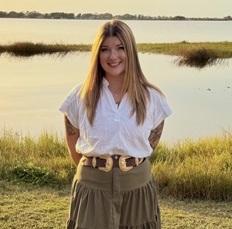 As a Master of Arts in Clinical Mental Health Counseling student at South University, West Palm Beach, Betty studied counseling theory and built practical skills for working with clients. Through her classes, she deepened her expertise in human behavior, relationships, and healing.
 “During my time in the program, I was highly engaged in both academic and clinical training, which prepared me to step into diverse clinical roles immediately following graduation,” she says. “The program emphasized not only knowledge, but also self-awareness, ethical practice, and the development of a clinical identity. My practicum and internship experiences were especially valuable in helping me feel confident entering the field.”
In 2023, Betty was named Graduate Student of the Year by the Florida Mental Health Counselors Association for her strong academic performance and commitment to the field. Beyond her own hard work, she credits a large part of her learning and growth to her instructors. “The faculty at South were instrumental in my development. They challenged me, supported me, and created an environment where growth was expected and encouraged,” she says.
Building a Counseling Career
Before earning her master’s degree, Betty did community-based work, helping individuals access resources and navigate systems. After finishing her CMHC program, Betty became a Registered Mental Health Counselor Intern while working toward full licensure. As she did, she continued to build her clinical skills and serve a range of clients.Now a Licensed Mental Health Counselor, Betty has worked in private practice, school-based settings, and a residential group home for adolescent males. She is strongly committed to relational and trauma-informed care and willing to step into spaces where support is often limited. “Each setting has deepened my understanding of how people adapt to survive, and how meaningful it is to be part of the process of helping them feel seen, understood, and supported,” she says.
Betty is trained in Brainspotting as well as Trauma-Focused Cognitive Behavioral Therapy. She is also certified in Imago Relationship Therapy. In her clinical work, Betty offers sliding-scale and pro bono services to make counseling more accessible for all. She also volunteers at local community centers. There, she helps with case management, assists with food pantry services, fundraises for addiction treatment centers, supports people in accessing mental health resources, and advocates for accessible care for low-income individuals.
With the help of an $18,000 scholarship from the American Public Health Association, Betty is now pursuing a PhD in Counselor Education and Supervision. Her goal is to train and mentor future clinicians. “I hope to continue expanding access to meaningful, high-quality mental health care while also contributing to the development of the counseling field through teaching, supervision, and program development,” she shares.
On Facing Challenges and Growth
Betty believes everyone faces unique challenges in their lives. “I am no exception. What has shaped me most is not just what I have experienced, but how I have chosen to grow through it,” she says. “I have learned that pain can either keep us stuck or become something we move through with intention. Those experiences have deepened my empathy, strengthened my resilience, and continue to inform the way I show up in both my personal life and my work as a clinician.”As for current students, Betty wants them to know that they will always be learning, even after school ends. “The growth does not stop at graduation, and that is a good thing. This field will continue to stretch you in meaningful ways, both professionally and personally,” she says.
She also emphasizes the importance of recognizing and honoring your impact today, no matter what stage of your career you are in. She advises, “The work you are doing matters right now. Stay grounded in your purpose, remain open to learning, and trust that your presence in the room with clients is more powerful than you may realize.”
Learn more about our Clinical Mental Health Counseling program today.
Tell us your alumni success story!
If you’re a grad who wants to share your experiences and career highlights, visit the South University Alumni Site to share your alumni success story.--
Graduates are required to pass the national certification exam and obtain a state license in order to work in the field. (Exam names vary by program.) Please refer to the State Professional Licensure Determination and National Certification/Licensure section of the University catalog for additional information. South University cannot guarantee each graduate will pass the required licensure examinations. South University does not promise or guarantee licensure, employment, or salary amounts.
Programs, including all Clinical/Medical programs, have a required in-person, practicum, or externship. We cannot guarantee flexibility in these components of the program.
Testimonials have been provided by students/alumni in their own words and without coercion. This spotlight is based on information shared in 2026.