Criminal Justice

Request Information
Master of Science in Criminal Justice
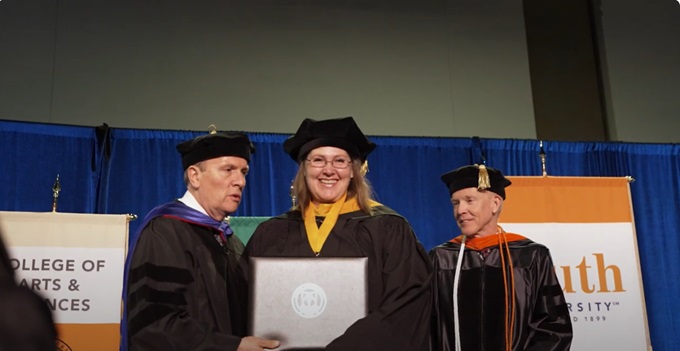
Earn a master’s degree in criminal justice from South University’s Savannah campus. The Master of Science in Criminal Justice program is designed for individuals employed in the criminal justice system, as well as those in other careers, both public and private, who wish to acquire further education in criminal justice. The graduate-level criminal justice courses can help foster a learning community of criminal justice professionals who will use their knowledge within law enforcement and/or correctional, political, and legal arenas*. Prerequisites are limited for the Master of Criminal Justice program so qualified students with bachelor’s degrees in related fields such as criminology, psychology, business or public administration, anthropology, political science, sociology or related social sciences may enroll, along with students who have undergraduate degrees in criminal justice.
Please note: While you may be able to take some general education courses at the campus, all other courses, including specialized courses, will be taken online.
*South University does not promise or guarantee licensure, employment, or salary amounts.
Admission Requirements
Admissions criteria for the Master of Science in Criminal Justice (MSCJ) Program
Graduate Admissions - Masters level
Prospective students are required to submit the following:
- Completion of application for admission
- Official transcripts for bachelor or graduate degree within 5 weeks of the class start date (refer to Conditional Acceptance). (All credentials earned outside the United States must be evaluated by a NACES or AICE-member credential evaluation service). Please speak with an admissions representative for more information.
Note: See program notes and specific requirements below for each graduate - masters level degree program
Specific requirements for admission to classified graduate status are:
- A bachelor's degree from an accredited college or university.
- Completion of application for admission.
- A 2.0 overall grade point average or higher on completed requirements for the baccalaureate degree, or an earned graduate degree from an accredited institution with a CGPA of 3.0 or higher.
Foundational Undergraduate Courses for the Master of Science in Criminal Justice
Completion of an undergraduate statistics course (with a grade of C or better) is required for the Master of Science in Criminal Justice. If the student does not have the course as part of their undergraduate degree, the course needs to be completed in the first two quarters of the program. Foundation undergraduate course credits do not count towards the total number of credits for graduation, nor do they count in the Cumulative Grade Point Average (CGPA); however, they do count in determining the maximum time frame (MTF) and the Incremental Completion Rate (ICR). MSCJ students enrolled in foundation undergraduate course must successfully complete the course within their first three attempts or the student will be academically dismissed from the University.
For additional admissions information please see the admissions section here.
For information regarding Conditional Acceptance, click here.
Course Requirements
Note(s):
The student will choose four courses (16 credits) from the remaining graduate level criminal justice curriculum listed below or from other graduate offerings with the guidance and approval of the Program Director in Criminal Justice or appropriate Program Chair and with the advice of the related Program Director if courses from other programs are desired. The student should plan to take at least 50% of this part of the degree program in criminal justice courses. Students may construct an area of emphasis with the guidance of the Program Director or Chair or pursue a more general set of elective course courses. Students may emphasize a traditional area of the field such as Corrections or Homeland Security, but elective choices may also reflect the particular professional goals and aspirations of the student. Thus, courses in areas such as Public Administration, Business, or Clinical Mental Health Counseling may be included as desired and approved and if the student completes the required prerequisites for such courses. Please note that Financial Aid may not cover prerequisite courses. Please see the Coursework Taken Outside a Student's Degree Program Policy found in the Academic Affairs section of this catalog.
Note(s):
Acceptance into a South University Criminal Justice program or its completion does not imply or guarantee that a student will be able to obtain employment in law enforcement, corrections, probation/parole, or related fields. The student should contact the national, state, or local agency/institution in which the perspective student intends to gain employment for specific requirements and the application process.
Outcomes
Upon completion of the program, students will be able to:
- Students will apply criminal justice theories to a variety of real-life problems within complex organizations.
- Students will evaluate the effectiveness of organizational policy in professional practice.
- Students will develop strategies for improving systemic communication within and between criminal justice agencies.
- Students will integrate research methodology central to the field of criminal justice.
Career Outlook
These are some of the career options* you can explore when you have earned your degree:
- Corrections Manager
- Intelligence Analyst
- Crime Reduction Manager
- Law Enforcement Administrative Manager
- Investigators
- Law Enforcement (*Additional training is required)
*South University does not promise or guarantee licensure, employment, or salary amounts.
What's New
Latest News and Blogs

Oct 14, 2026
Alumni Spotlight: A Business Grad Builds a Better Life for Her Family
Studying business at South University has helped Bridgett Kelly start her own in-home care business and build a legacy she’s proud of for her family.

Oct 13, 2026
How Career Services Can Support You as a Student and Beyond
Learn how Career Services can support you as you prepare to begin your career through mock interviews, resume reviews, and so much more.

Oct 07, 2026
Alumni Spotlight: A Step Closer to Opening Her Own Practice
Learn how Tonya Martin pursued an education at South University and how her education has helped her in her career as a nurse.

Oct 06, 2026
Working in Healthcare Without Working Nights: What’s Possible?
If you want a healthcare career but prefer a daytime schedule, you may have more options than you think. Learn what you can do in healthcare without working nights.

Sep 30, 2026
MBA Grad Spotlight: Growing a Paralegal Business
See how Tramaine Luster has used her Paralegal Studies, Legal Studies, and MBA degrees to grow her paralegal career and give back to her community.

Sep 29, 2026
When Is the Right Time to Get an MBA?
Read our advice on what you need to consider before deciding when to get your MBA. The answer is different for everyone!
Fill out the form and a representative will contact you today to better understand your academic goals plus answer any questions you may have.
Campuses offer flexible learning formats* including: on-campus, virtual instructions, and online courses.
*Clinical, practicum, and externship requirements exist in certain programs and require field experiences. Learning formats may not be flexible.
Success! Your request was submitted. We'll be in touch soon!
In the meantime, you can view some of our FAQs.
If you want to talk to an admissions representative ASAP, please contact us at (888) 444-3404.
Outstanding Education for Remarkable Careers
We're committed to helping our graduates make an impact in their professional and personal lives. We applaud our alumni and the difference they make. Check out what some of our Criminal Justice & Legal Studies graduates have to say.